For his final collection at Diesel, Glenn Martens did not stage a farewell. He threw a party. Spring Summer 2027 arrived in Milan as an exercise in desire, chaos and excess: a collection that compresses the codes developed during his time at the house into one final, deliberately unruly celebration.
“The party always comes first at Diesel. It’s about inclusivity, self-expression, pleasure and the democracy of experience,” Martens explained. “The collection is the essence of Diesel: disruptive, sexy, fluid, fun. We are all in this together: let’s take a ride one more time.”
And that final ride was never going to be quiet.
A runway that behaves like a club
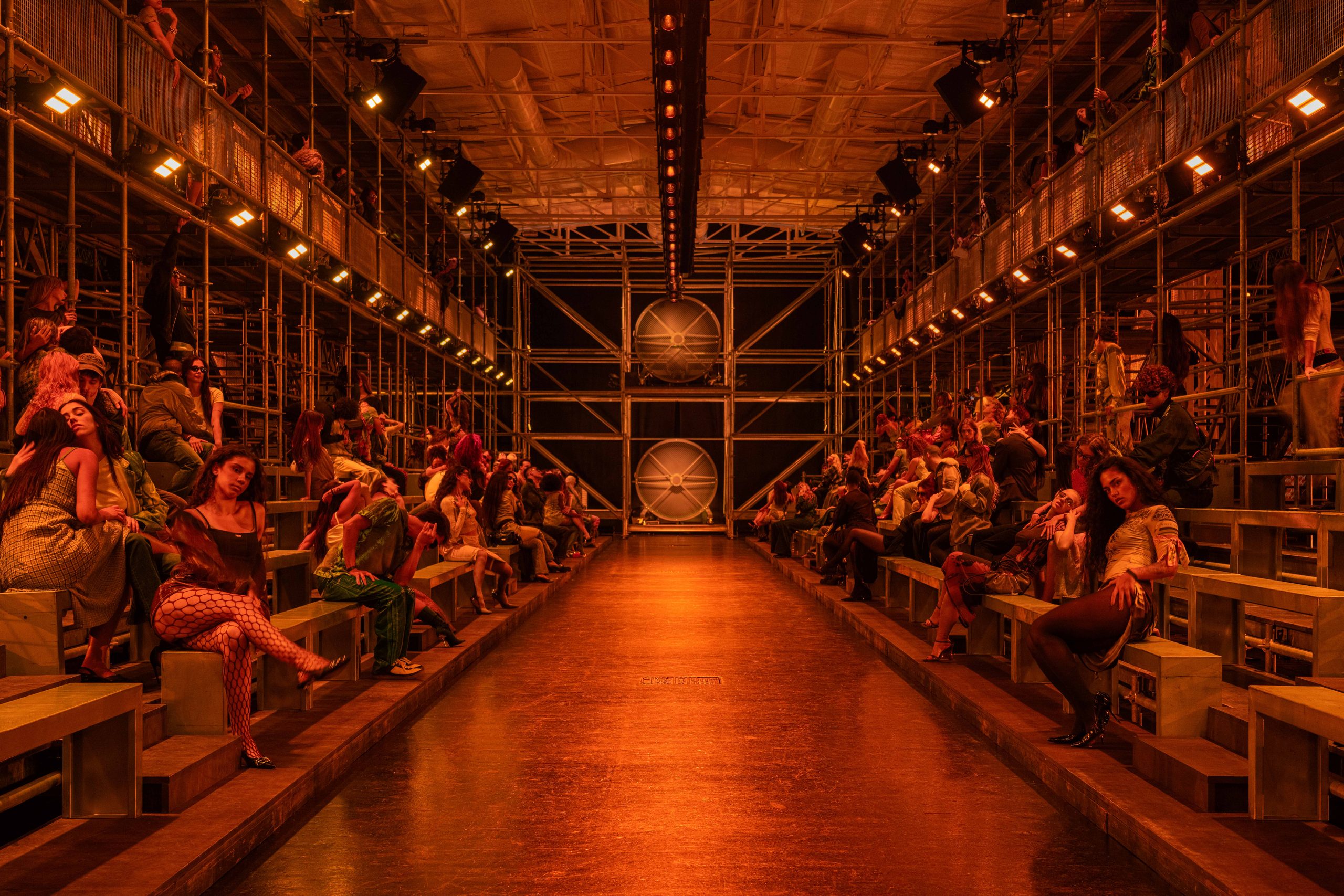
Diesel transformed its venue into a purpose-built club, blurring the distinction between runway, audience and performance.
Scattered among the guests were 200 performers working with Marseille collective (LA)HORDE, whose interventions unfolded throughout the show. Some were subtle; others deliberately uncomfortable, sensual or impossible to ignore.
What initially appeared spontaneous gradually intensified. The tension grew until runway and performance reached a shared release, accompanied by a reworking of Donna Summer’s “Love to Love You Baby.”
Rather than simply watching the spectacle, the audience became trapped inside it.
Clothes caught in the middle of the night
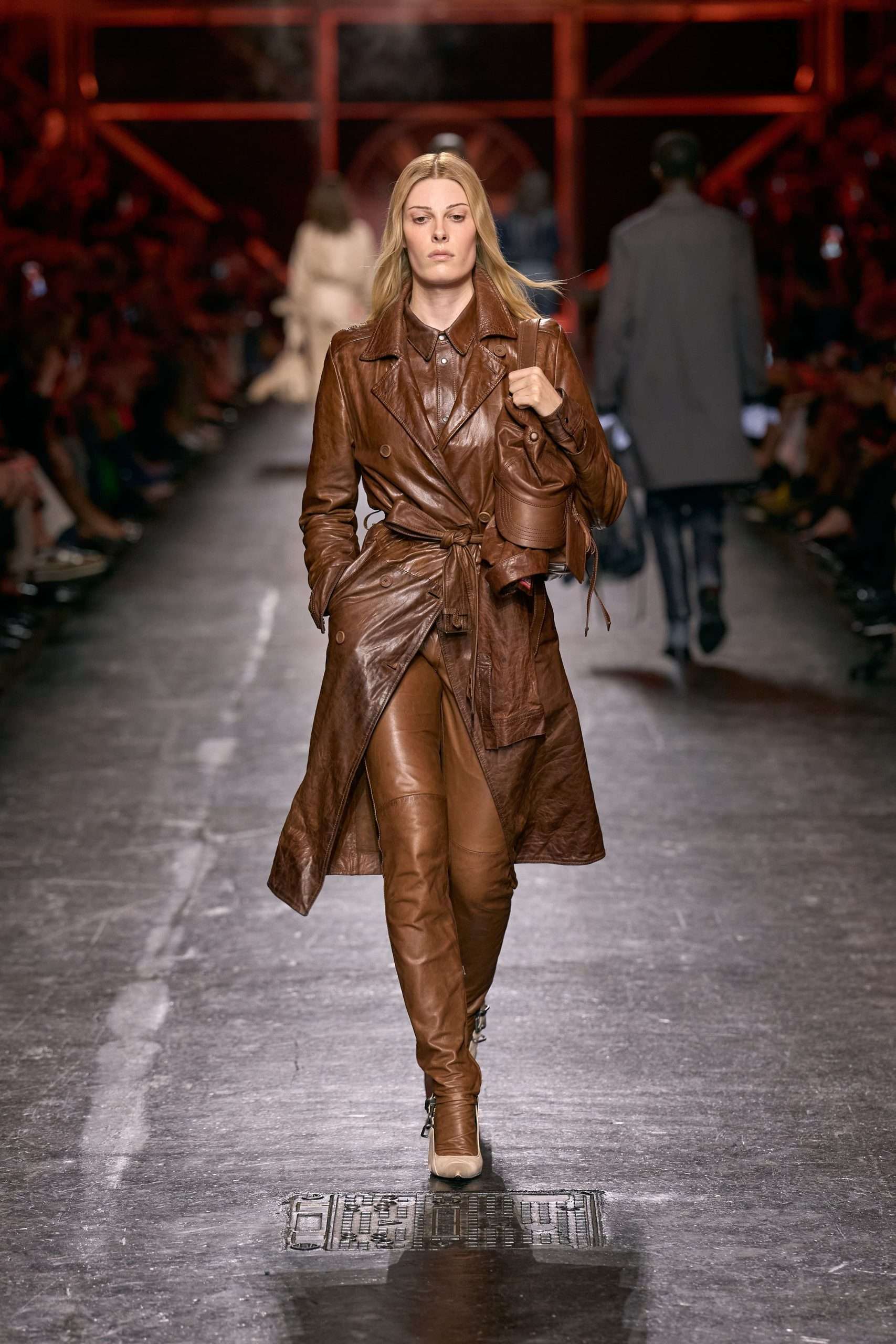
The collection follows the same instinct. Garments appear layered, fused, twisted or partially undone, as though getting dressed has become an impulsive act.
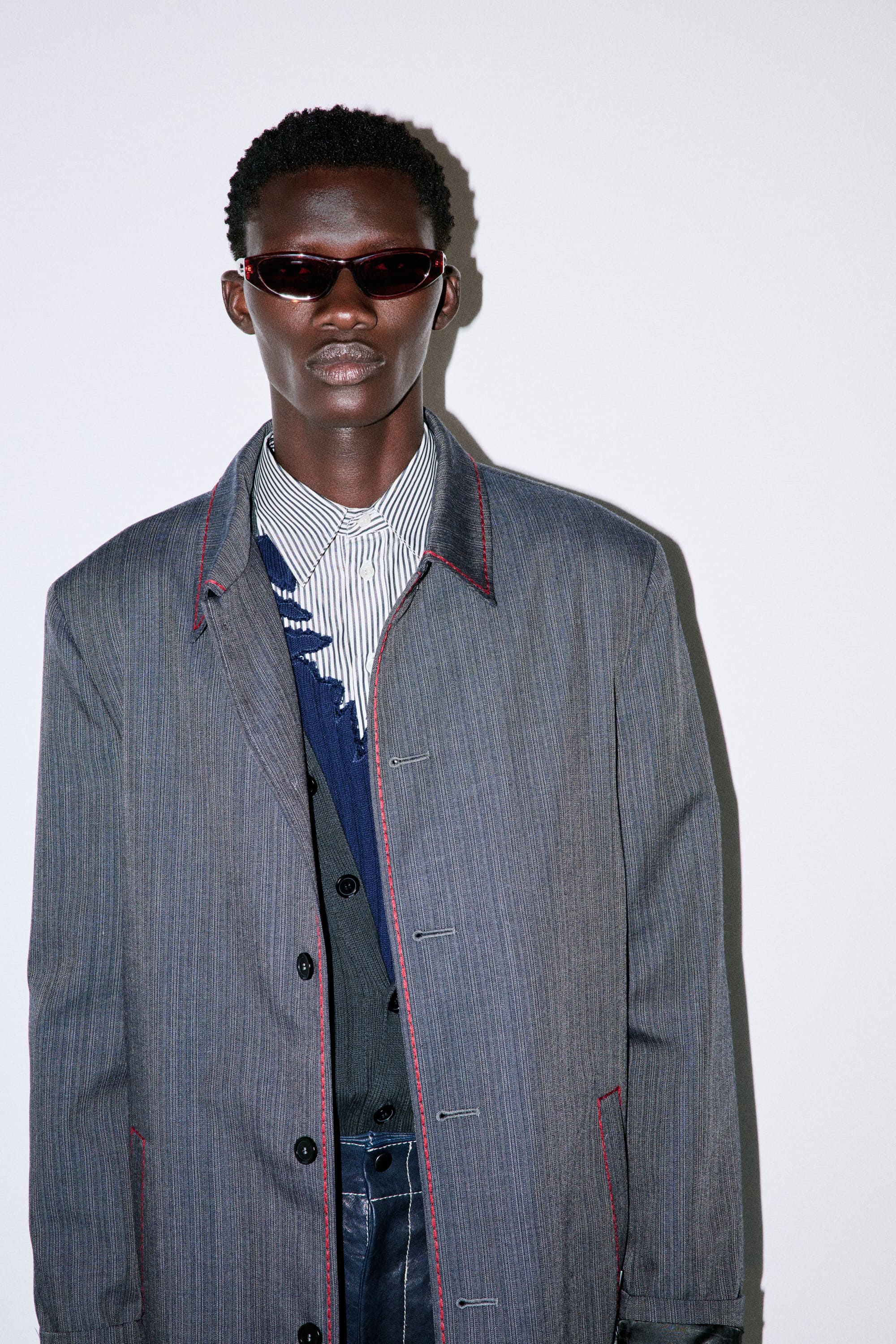
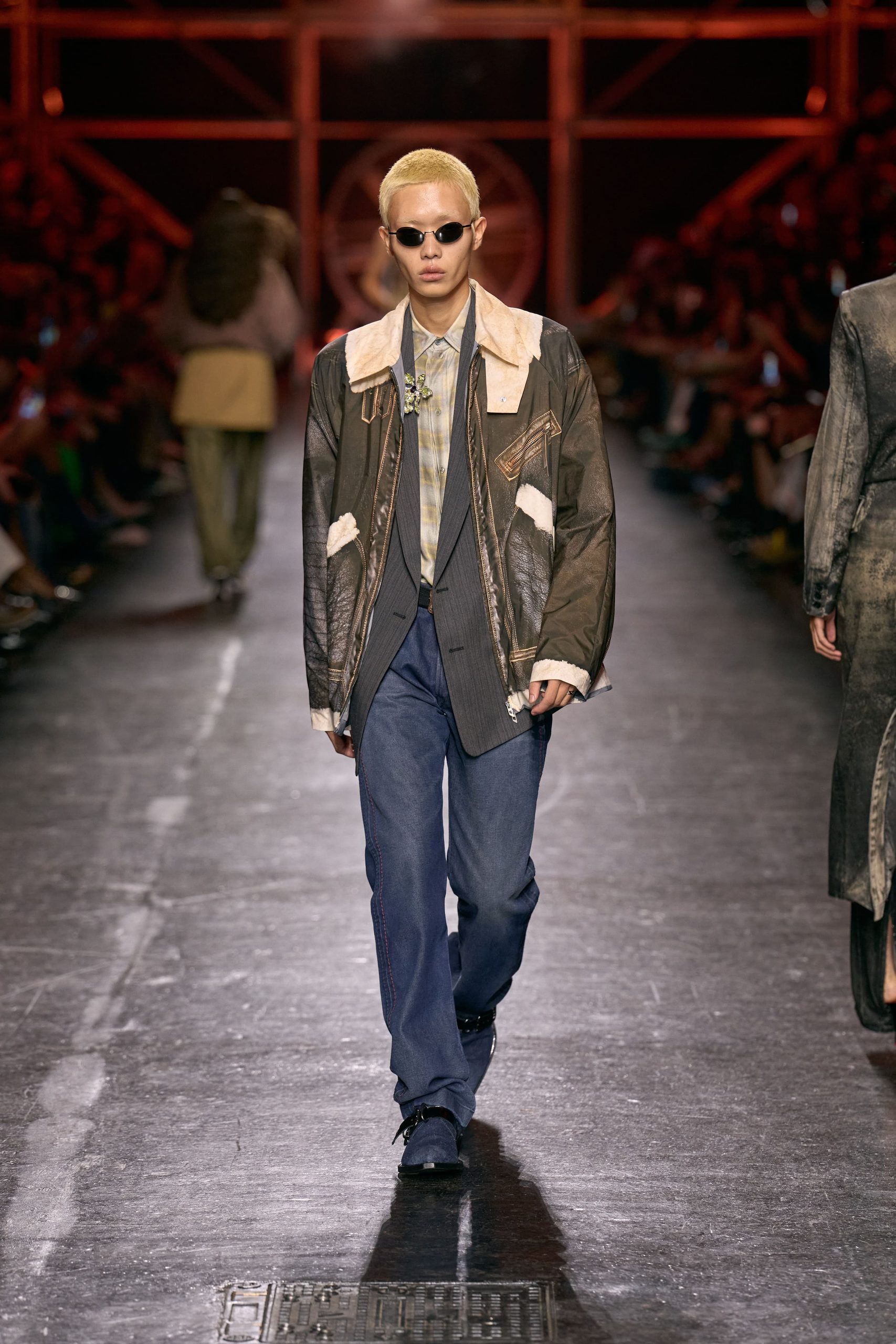
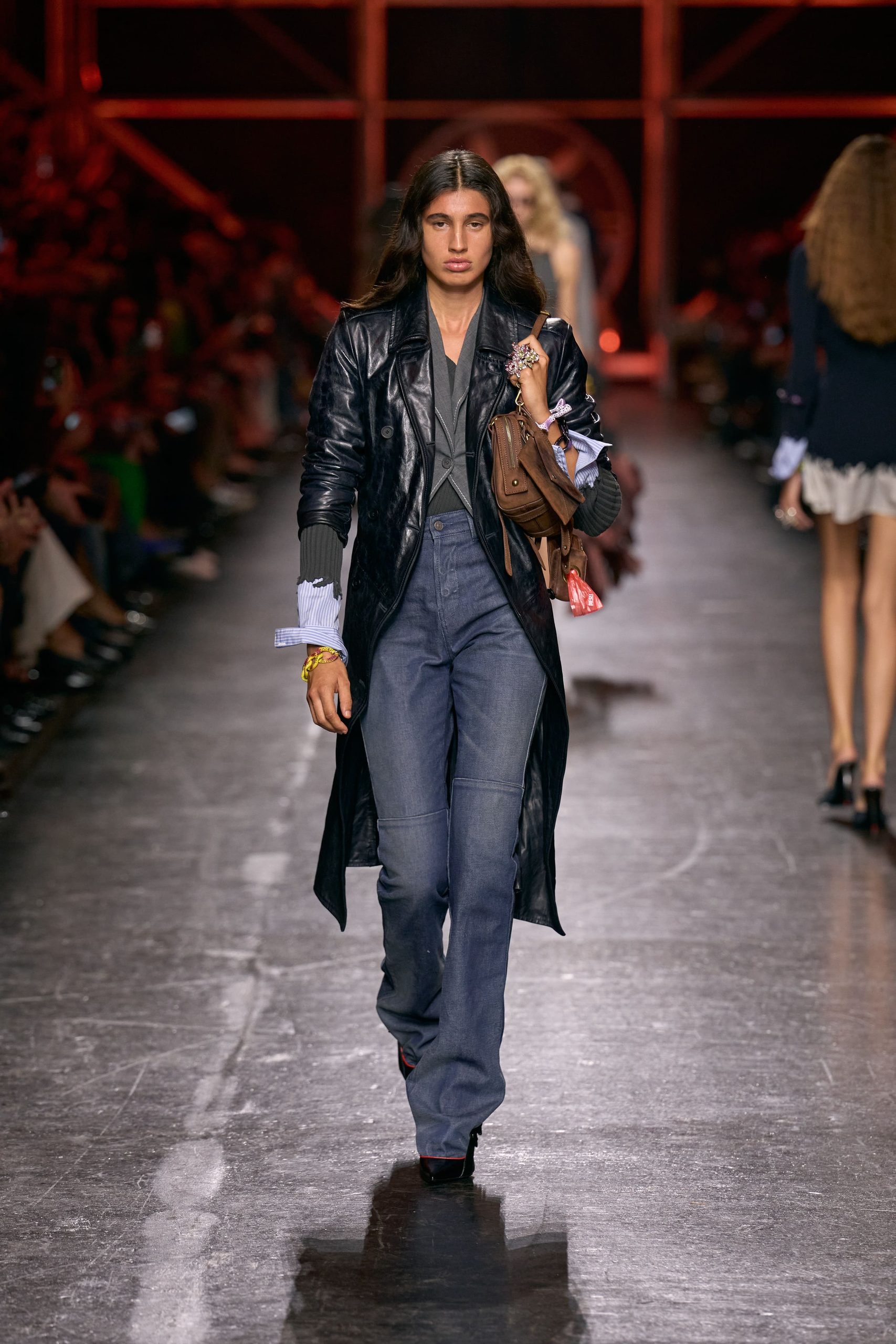
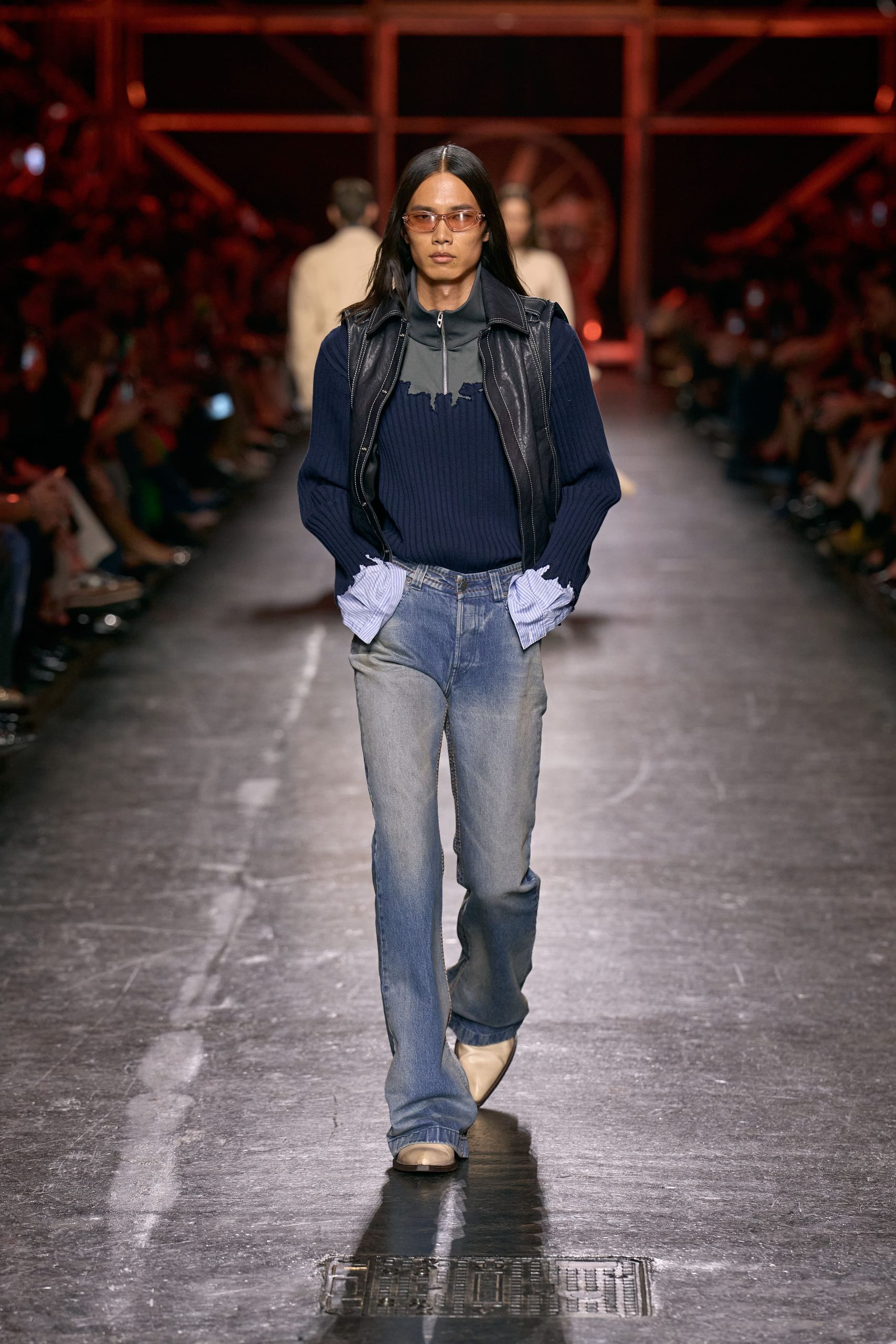
A waxed leather jacket sits over a topstitched blazer, itself layered with a ribbed sweater merged with a tracksuit collar and shirt cuffs. Elsewhere, different garments physically become one, with orchid-shaped cutouts exposing the points where they collide.
Skirts appear relatively restrained from the front before opening dramatically at the back. T-shirts become bras, bandeaus and dresses through twisting and gathering. Shirts and tailoring fold into themselves, while sheer floral dresses and slips look deliberately disordered.
The effect suggests the aftermath—or perhaps the continuation—of a very long night.

Nothing is quite what it appears
Martens once again uses trompe l’oeil to destabilize familiar clothing.
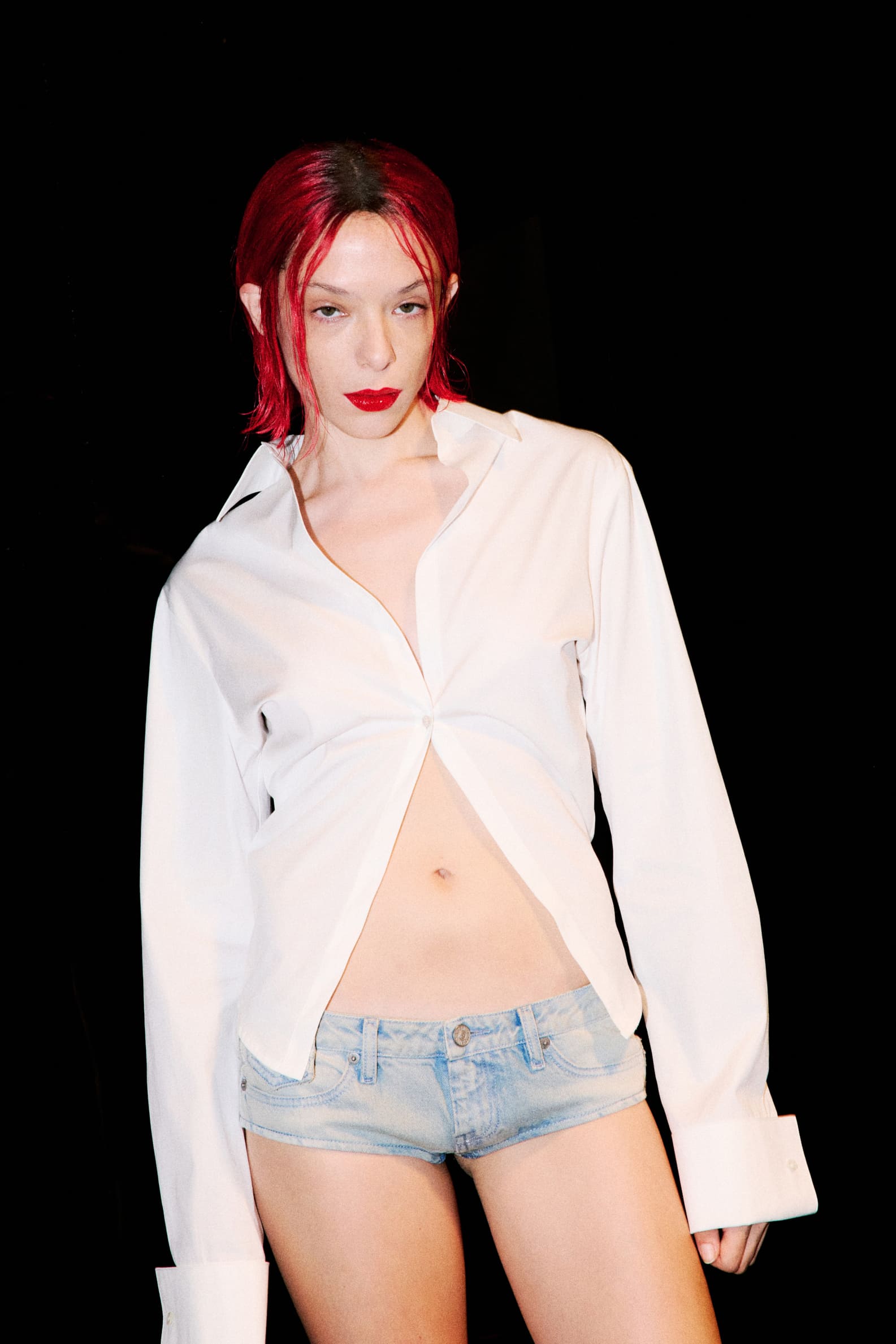
Denim is coated and laser-treated until it resembles leather. Lightweight shirts carry prints of heavy tweed coats and winter jackets, bringing the visual weight of cold-weather dressing into summer. One print even revisits the raw-edged shearling coat from Martens’ first Diesel runway show.
Elsewhere, apparent micro denim shorts are actually transfers printed roughly onto jersey, while foil-treated bombers masquerade as baseball or biker jackets.
The collection repeatedly asks the same question: if something looks like denim, leather or tailoring, does it actually need to be any of those things?
Skin becomes part of the construction
As the show progresses, clothing begins to disappear.
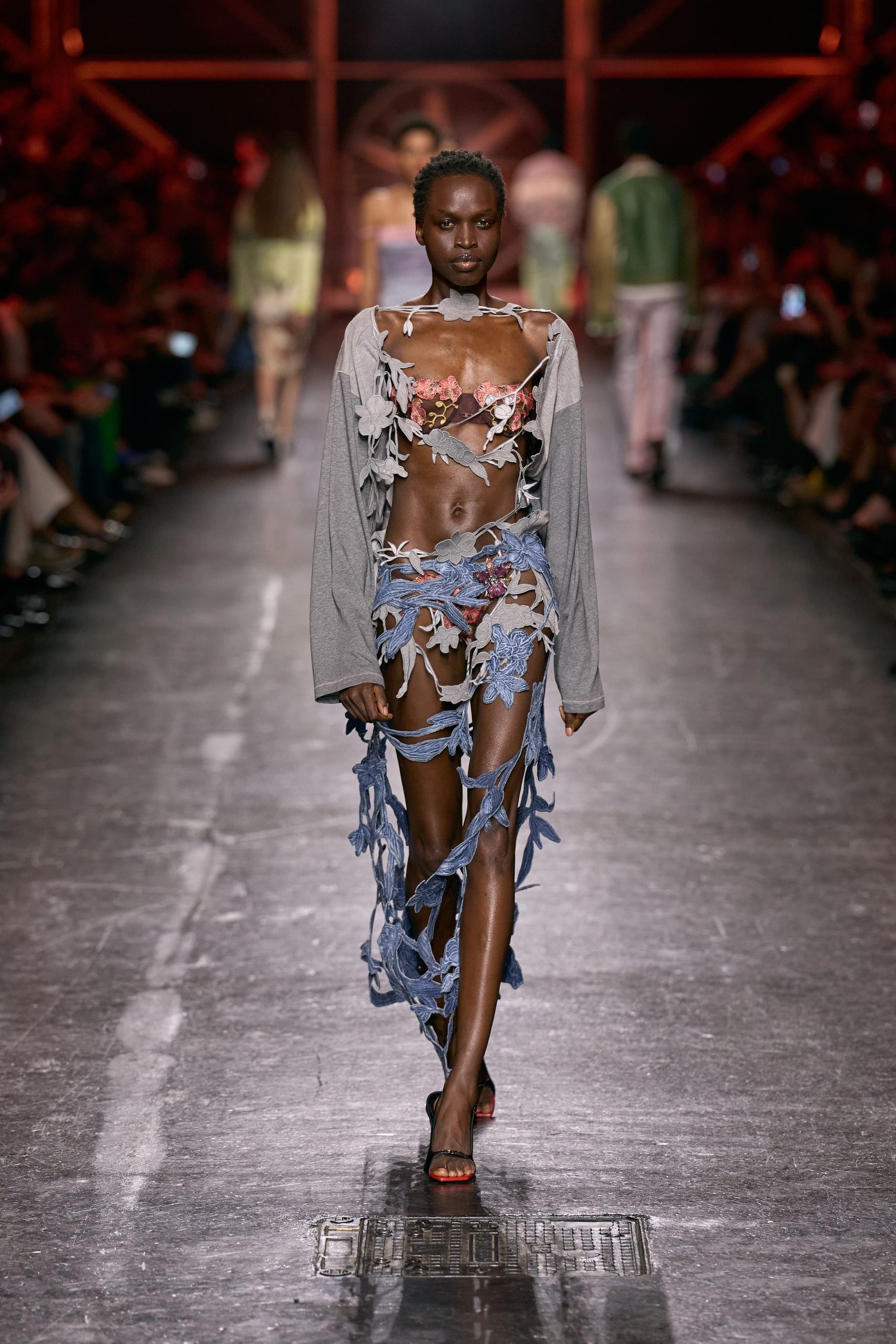
Orchid-shaped cutouts consume striped jacquard knits. Polo dresses lose sections of their hems. Tailored skirts and slim trousers plunge unexpectedly low at the waist, edged with floral embroidery, while T-shirts, sweatshirts and jersey dresses are reduced until only fragments remain.
The orchid is more than decoration. It becomes a recurring visual device across clothing, lingerie and jewelry, while connecting the collection with Only Desire, Diesel’s newest fragrance.
For the first time, lingerie also enters the Diesel universe, structured with boning and embroidered with the same flower.
Everything returns to denim
Beneath all the experimentation, Martens returns to the material at the core of Diesel.
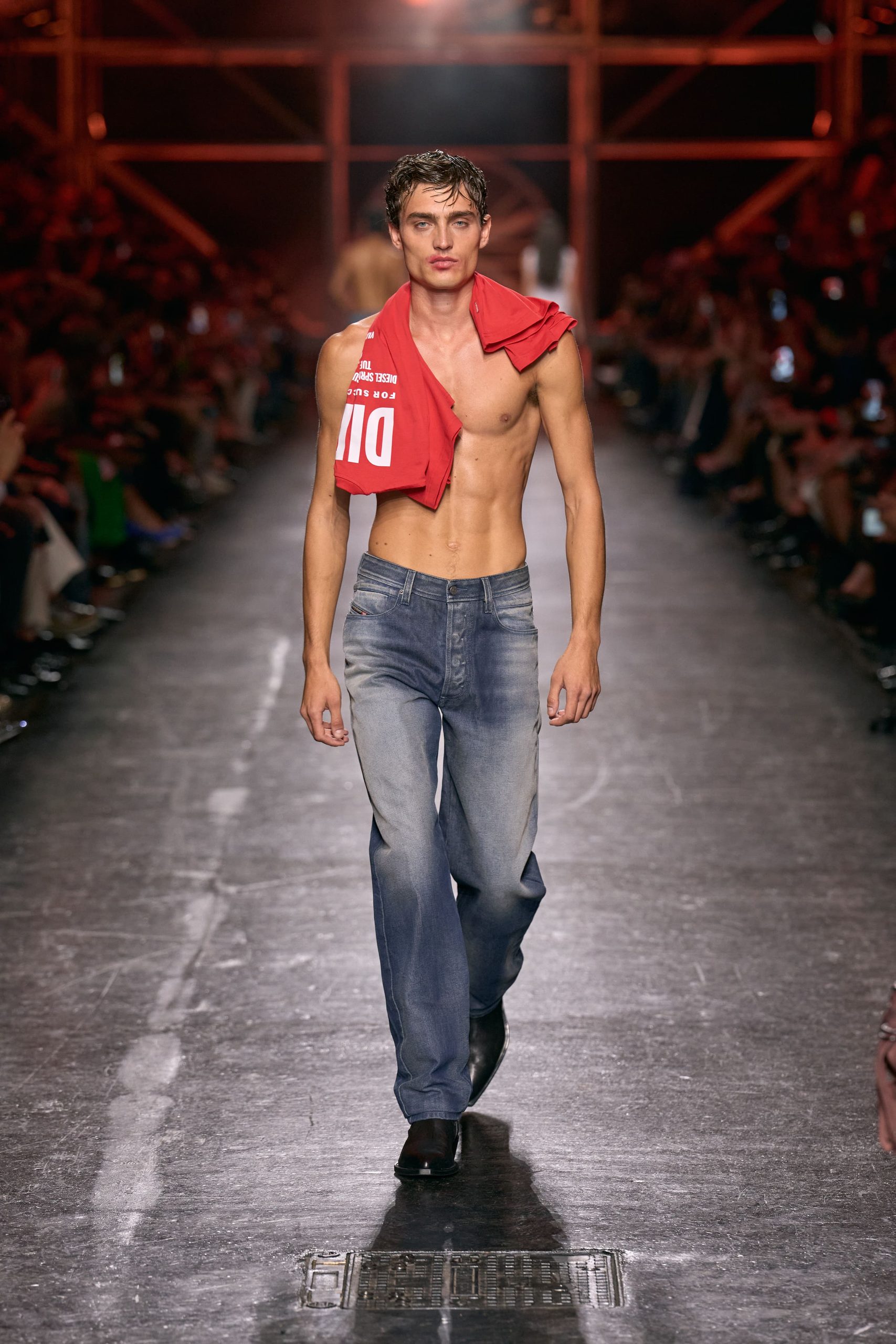
Bootcut jeans gain their flare through inserts at the inner ankle. Straight-leg denim is coated and lasered into convincing leather effects. Other jeans feature topstitching, openings designed around stiletto heels or entire denim shirts attached at the waist as though casually tied there.
Then come the micro shorts: increasingly abbreviated until the final iterations function almost as a manifesto for the party itself.
For the last look, Martens chose Ella Snyder, the model who opened his debut Diesel collection. The gesture closes the circle without sentimentality: the same figure who marked the beginning returns for the end.
One final round
Accessories extend the collection’s controlled disorder.
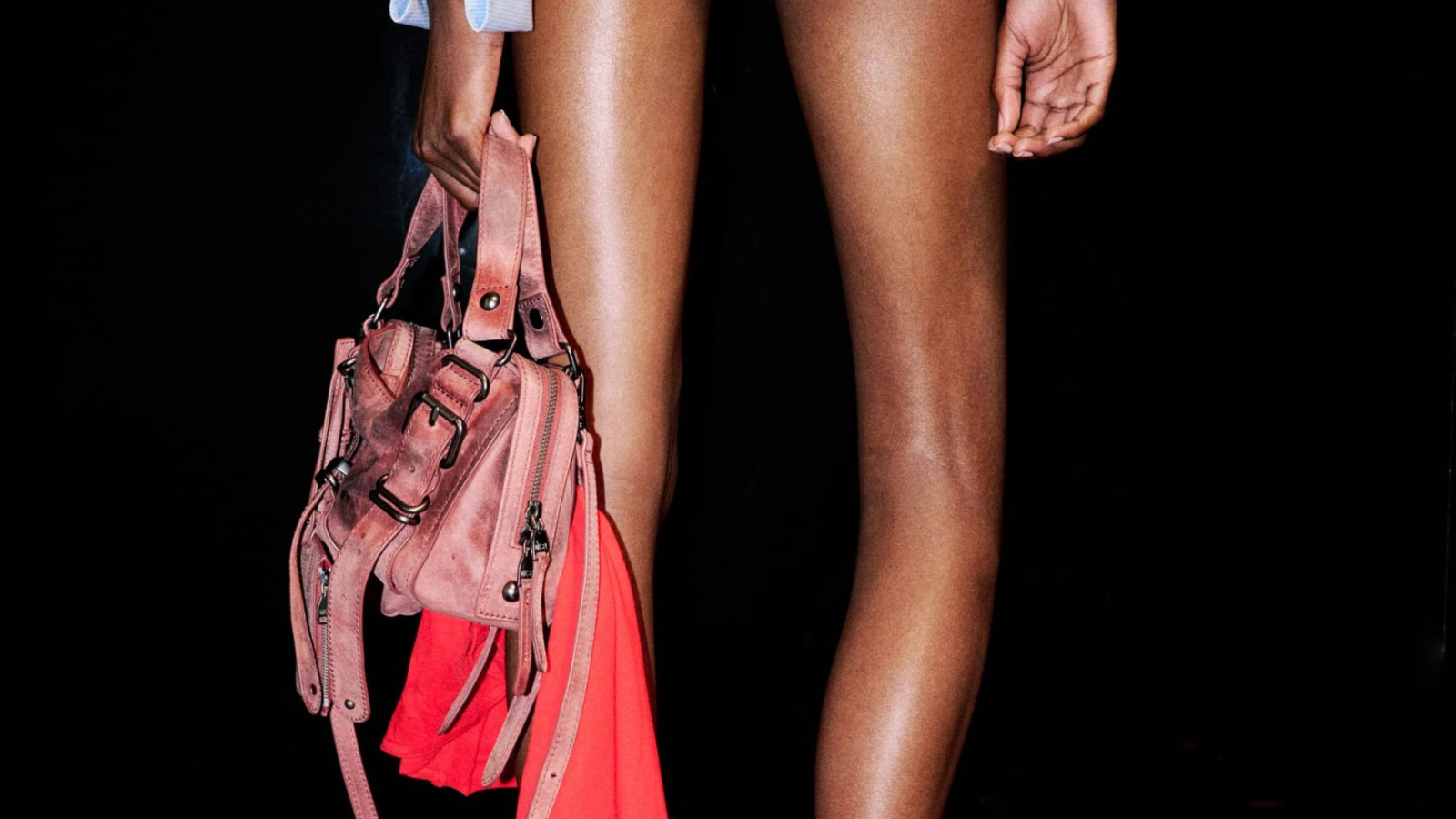
The D-ONE returns across different textures and finishes, its handles transforming into rows of buckled straps. New leather charms turn mundane objects into accessories: a sock becomes a pouch and a newspaper becomes a clutch.
The new slouchy LOCK-D introduces the Double D motif as a closure, while the same symbol migrates across loafers, slingbacks, mules and kitten-heel clogs. D-ONE buckles appear on pumps, stretch boots and heeled mules, alongside Western-inflected denim clogs and boots for men.
There is also a miniature version of the D-RUSH watch and new tonal variations of the transparent TRAN-D-SPARNT eyewear.
But Spring Summer 2027 ultimately feels less like a catalogue of individual pieces than a final statement about the Diesel Martens built: denim distorted beyond recognition, sensuality without restraint, technical experimentation, humor and the pleasure of refusing to behave.
Glenn Martens leaves Diesel the same way this collection dresses its wearer: a little twisted, partially undone and still somewhere in the middle of the party.